

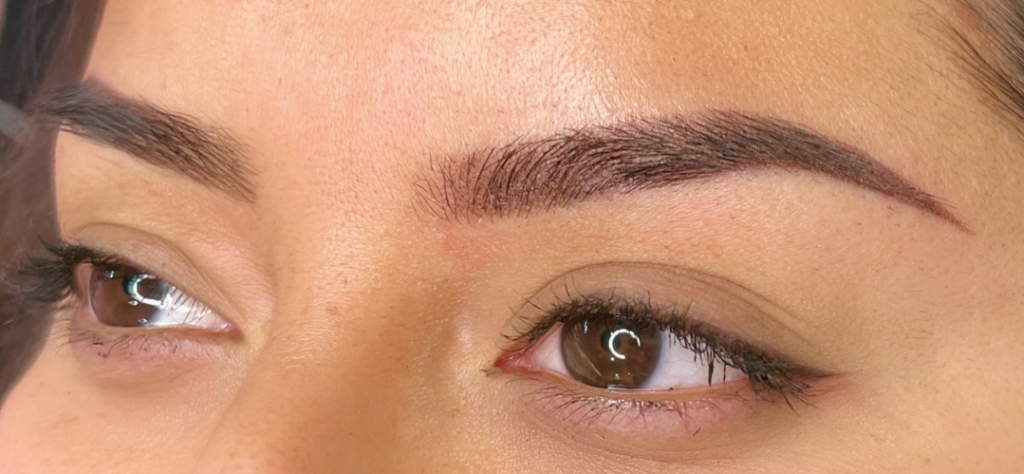
Microblading can cause skin scarring not because it is inherently “bad,” but because the mechanics of the technique conflict with how human skin heals—especially in high-UV, coastal environments like Newport Beach. Scarring becomes more likely when variables such as pressure inconsistency, repeated trauma, inflammation, and individual skin biology intersect. To understand why this happens, it is essential to understand skin anatomy, wound-healing physiology, and how manual microblading differs from controlled, machine-based pigment implantation.
Human skin is composed of three primary layers: the epidermis, dermis, and subcutaneous tissue. The epidermis regenerates completely every 28 to 40 days and does not scar. Scarring occurs only when injury penetrates into the dermis, where collagen, elastin, blood vessels, and fibroblasts reside. Microblading is intended to place pigment at the epidermal–dermal junction, a zone often less than 0.3 millimeters thick. This margin for error is extremely small. Any deviation beyond this depth triggers a dermal wound response rather than simple regeneration.
Why Manual Microblading Creates Unpredictable Depth
Unlike machine-based techniques, microblading relies entirely on manual pressure. Each stroke is created by dragging a blade made of multiple needles across the skin. Pressure varies naturally based on hand fatigue, angle, skin resistance, hydration, elasticity, and even the curvature of the brow bone. As a result, penetration depth is inconsistent—even within the same brow.
When a blade penetrates too deeply, it disrupts collagen fibers and capillaries. At that point, the body no longer interprets the procedure as cosmetic pigment placement. It interprets it as injury.
The Wound-Healing Cascade And Why Scarring Happens
Once the dermis is injured, the body activates the wound-healing cascade, which occurs in three phases: inflammation, proliferation, and remodeling.
During the inflammatory phase, immune cells release cytokines and growth factors to control damage. When microblading trauma is excessive—due to deep cuts, repeated passes, or overworking the same area—this inflammatory phase becomes prolonged. Prolonged inflammation signals the body to prioritize structural strength over flexibility, which is a known precursor to scar formation.
In the proliferative phase, fibroblasts migrate to the wound and rapidly produce type III collagen. This collagen is laid down quickly and without the organized structure of healthy skin. In shallow, controlled injuries, this collagen is later remodeled into normal tissue. However, when trauma is uneven or repeated, fibroblasts produce excess collagen as a protective response. This excess collagen forms fibrotic tissue—the biological basis of scarring.
Why Microblading Strokes Are Riskier Than They Appear
Each microblading “hair stroke” is not a puncture—it is a linear incision. Linear incisions disrupt more tissue than point-based needle entry and create a larger surface area for inflammatory signaling. When strokes are placed close together, especially during touch-ups, the skin often does not fully recover between sessions.
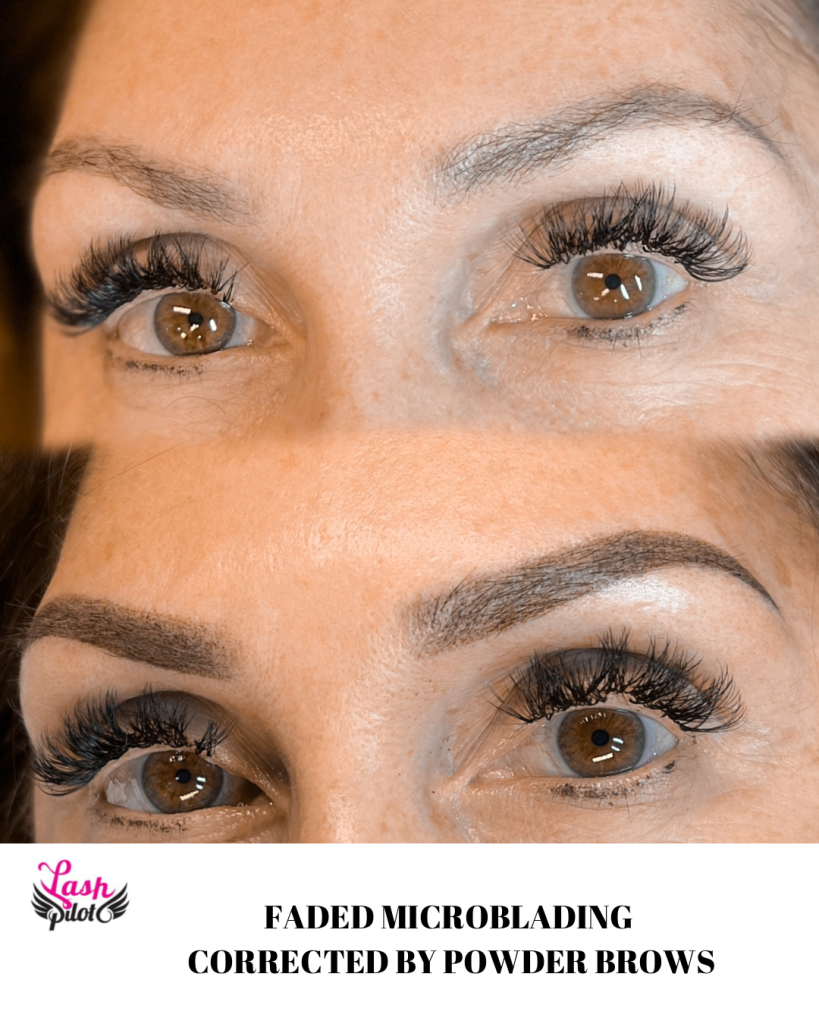
Re-injuring partially healed tissue dramatically increases the likelihood of permanent collagen distortion. Over time, this results in shiny skin, texture changes, or visible indentation where strokes once existed—outcomes frequently seen in long-term microblading Newport Beach clients due to sun exposure and environmental stress.
Skin Elasticity, Sun Damage, And Coastal Risk Factors
Skin with reduced elasticity—common in sun-exposed or mature clients—has less structural resilience. When a blade cuts into this compromised dermis, the tissue cannot rebound efficiently. Instead of closing cleanly, wound edges collapse irregularly. During healing, collagen is deposited unevenly, creating texture changes that become more apparent over time.
Vascular injury further compounds this issue. Pinpoint bleeding indicates penetration into the vascularized dermis. Blood vessel damage releases additional inflammatory mediators and increases oxidative stress. Clients prone to acne scarring, hypertrophic scars, or keloids are especially vulnerable to post-inflammatory fibrosis.
Pigment As A Chronic Inflammatory Trigger
When pigment is implanted too deeply, the body treats it as a foreign material. Macrophages attempt to isolate and encapsulate these particles, creating chronic low-grade inflammation. Chronic inflammation disrupts normal collagen remodeling, increasing the likelihood of permanent textural change.
This is why scarred microblading often appears shiny, gray, or patchy. The pigment becomes trapped inside fibrotic tissue rather than evenly suspended in healthy dermis.
Why Certain Skin Types Scar More Easily
Oily skin interferes with wound closure and increases friction during healing. Melanin-rich skin has more reactive melanocytes and fibroblasts, making it biologically more responsive to trauma. In these skin types, even moderate microblading injury can lead to thicker collagen bundles and long-term texture irregularities. This is not a flaw—it is a protective biological response.
Environmental factors amplify these risks. UV exposure stimulates melanocytes and fibroblasts simultaneously. Heat, sweating, and salt air—common in Newport Beach—prolong inflammation during the healing window, pushing the skin toward fibrotic repair rather than regeneration.
Why Scarring Often Appears Years Later
Microblading scarring is often subclinical at first. Skin may appear normal after healing, but microscopic fibrosis beneath the surface alters how pigment behaves in the future. This is why subsequent procedures—whether additional microblading, nano brows, or laser—become unpredictable. Scar tissue does not accept pigment or energy evenly.
In scientific terms, microblading causes scarring when mechanical trauma exceeds the skin’s regenerative threshold. When that threshold is crossed, the body repairs through collagen reinforcement rather than true tissue regeneration. Under these conditions, scarring is not accidental—it is biologically logical.
What This Means For Clients In Newport Beach
Understanding this science does not mean microblading should never be done. It means it must be highly selective, conservative, and tailored to skin type, age, environment, and long-term goals. When these variables are ignored, scarring is not a complication—it is a predictable outcome.
This is why modern brow artistry in coastal California has shifted toward machine-based techniques such as nano brows, which allow precise depth control, reduced trauma, and safer long-term skin preservation.
