

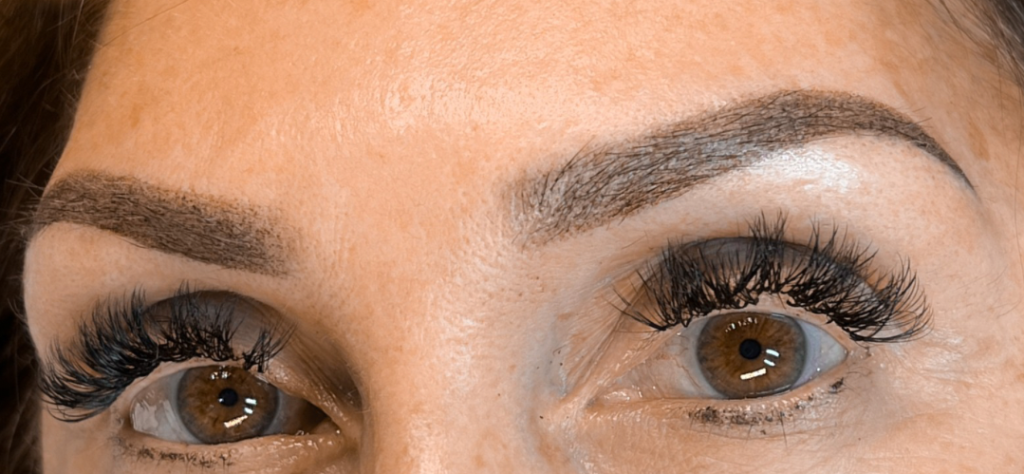
One of the most overlooked factors in microblading outcomes—especially in microblading Newport Beach cases—is artist training depth.
Microblading became popular partly because it is relatively easy to teach quickly. Many courses are designed to be completed in one or two days, focusing on stroke patterns rather than skin behavior. While this allows artists to produce visible results quickly, it does not prepare them to predict how brows will heal months or years later.
Because microblading relies on a manual blade with no vibration, it requires less motor coordination than machine-based techniques. This lower barrier to entry has made it widely accessible—but accessibility does not equal mastery.
Initial results may look crisp because pigment is sitting prominently in fresh wounds. Long-term results, however, depend on depth control, pressure awareness, and understanding how collagen, immune response, and pigment chemistry interact over time—knowledge that cannot be gained in a weekend.
Why Nano Brows Require More Skill—And Why That Protects Skin
Nano brows demand a significantly higher level of technical control. Working with a vibrating digital pen requires refined muscle memory, constant pressure adjustment, and real-time response to skin resistance, elasticity, and hydration.
An easy analogy is drawing with a pencil versus drawing with a power tool. A pencil stops when your hand stops. A vibrating machine continues moving even when your hand hesitates. If pressure is inconsistent, pigment can be placed too deep or too shallow. Too shallow, and pigment disappears. Too deep, and inflammation or fibrosis occurs.
This is why nano brows cannot be mastered quickly—and why they tend to age more gracefully when performed by experienced artists.
Powder Brows: Different Technique, Same Skill Requirement
Powder brows also require advanced expertise, though in a different way. Instead of creating hair strokes, powder brows rely on controlled layering and diffusion. Inexperienced artists often oversaturate the skin, leading to harsh results, prolonged inflammation, and premature color shifts.
Experienced artists understand that longevity comes from restraint, not intensity. Gradual layering allows the skin to heal evenly and retain pigment without trauma.
Technique Does Not Protect Skin—Skill Does
Artist skill directly affects skin health. Experienced artists recognize early signs of stress—excessive redness, swelling, fluid release, or resistance—and adjust immediately. Less experienced artists may continue working to “perfect” results, unintentionally overstimulating fibroblasts and increasing scarring risk.
Skill also determines how pigment ages. Experienced artists select pigment based not only on day-one appearance, but on how it will interact with skin chemistry, UV exposure, and immune response over time. This level of decision-making comes only from observing healed work—not just fresh results.
Microblading often appears simpler because it is easier to learn quickly—not because it is safer or more advanced. Nano brows and powder brows demand more training, more discipline, and more respect for skin biology. That higher barrier naturally limits who can perform them well.
For clients, the most important question is not “Which technique is best?”
It is:
“How experienced is the artist with my skin type, and how do their results look years later?”
Trends change. Biology does not.
