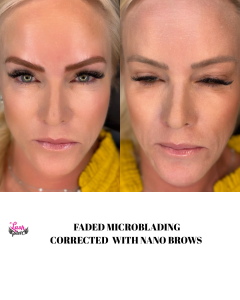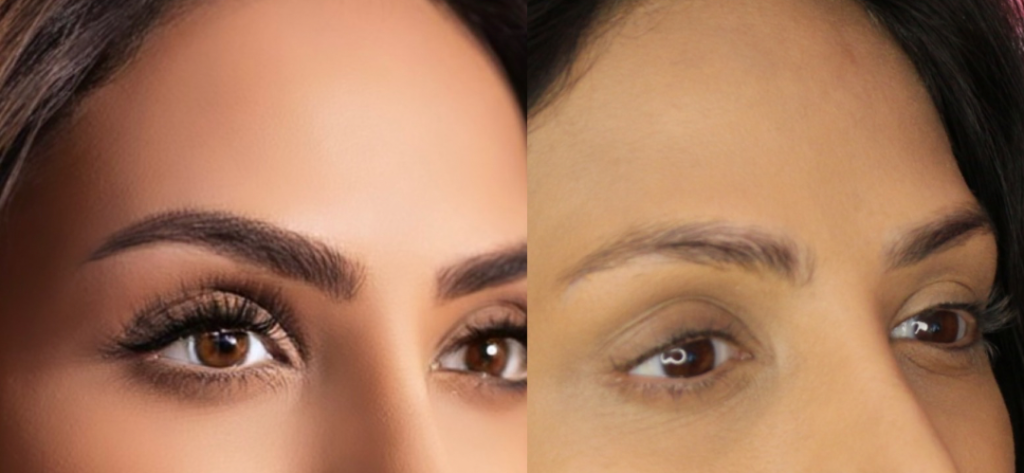
Microblading can look stunning when it’s fresh. Hair-like strokes appear crisp, brows look fuller, and the result often feels life-changing. But for many clients in Newport Beach, the real story doesn’t begin on day one—it begins one to three years later, when brows start to fade unevenly, blur, or shift color.
This isn’t because microblading was “done wrong.” It’s because skin biology, sun exposure, and coastal living change how pigment behaves over time.
Newport Beach presents a unique environment for permanent makeup. Higher UV exposure, humidity, salt air, active outdoor lifestyles, and oil production all accelerate pigment breakdown and immune response. Techniques that perform well on dry, low-UV skin often behave very differently here. Understanding this difference is the key to avoiding long-term regret—and to choosing brow techniques that age gracefully instead of unpredictably.
This guide explains the science behind microblading in Newport Beach, why fading, color shifts, and scarring can occur, and why many clients eventually transition to newer techniques like nano brows. The goal is not to discourage microblading, but to help you make an informed decision based on your skin, your environment, and your long-term goals—not trends.
Microblading In Newport Beach: The Beginning, The Boom, And Why The Industry Is Evolving
Microblading was once considered a true breakthrough in the beauty industry. For the first time, eyebrow enhancement could look like real hair instead of makeup or harsh tattooed blocks.
Before microblading, traditional eyebrow tattoos were created using machines that filled the brow with solid color or heavy shading. These older techniques often penetrated too deeply into the skin, healed dark or bluish, and aged poorly—especially under sun exposure.
Microblading changed everything by introducing a manual hand tool made of tiny, grouped needles. Instead of filling the brow, the artist etched ultra-fine, hair-like strokes into the skin and placed pigment inside those shallow cuts. Each stroke was designed to mimic the direction, thickness, and flow of natural eyebrow hair. To clients in Newport Beach and across Coastal California, this felt revolutionary. Brows suddenly looked soft, textured, and realistic—almost undetectable.
This realism is why microblading in Newport Beach spread so quickly. Clients saw brows that followed natural hair growth patterns, tapered delicately at the tail, and framed the face without looking tattooed. Compared to older brow tattoos, microblading felt like switching from blurry static to high-definition television. For many people—especially those who over-plucked in the 1990s or had genetically sparse brows—microblading restored confidence, not just appearance.
When Demand Outpaced Education
As microblading grew in popularity, demand skyrocketed—and so did training programs. Unfortunately, many courses were shortened to one or two days, focusing primarily on drawing strokes rather than understanding skin anatomy, pigment behavior, or long-term healing.
Microblading relies heavily on pressure control. The blade cuts the skin using manual force, and even a small change in pressure can push pigment too deep. When pigment is implanted deeper than intended, the body begins to recognize it as a foreign substance. Over time, immune cells slowly break it down or shift its color. This is one of the main reasons clients later experience gray, blue, red, or muddy brows.
In a coastal environment like Newport Beach—where sun exposure, humidity, and active lifestyles are common—these issues become even more pronounced.
Retention Vs. Trauma: The Hidden Trade-Off
One of the biggest challenges with microblading is the balance between pigment retention and skin trauma. Human skin is not uniform. Oily skin, mature skin, sun-damaged skin, and sensitive skin all heal differently.
Some Newport Beach clients experience rapid fading because their skin naturally pushes pigment out during healing. Others see strokes heal darker and blurrier because pigment was implanted too deeply. Over time, repeated microblading sessions create cumulative trauma. Scar tissue forms, skin texture changes, and crisp hair strokes slowly expand into thicker, uneven lines.
This doesn’t always happen immediately. In many cases, the damage becomes visible one to three years later—long after the initial excitement fades.
The “Doom Day” Of Microblading (And Why It Happened)
Professionals now refer to this period as the quiet “doom day” of microblading. Not because the concept was flawed, but because the technique was overused on skin types and in environments it was never designed for.
Coastal California presents extreme conditions: intense UV exposure, frequent exfoliation, sunscreen use, salt air, and increased oil production.
The market became flooded with undertrained artists adding more pigment to already compromised skin. Clients who once loved their brows later searched for help—brows that had turned red, gray, scarred, or unable to hold clean strokes. This wasn’t caused by bad intentions. It was caused by misunderstanding skin biology.
Why Microblading Fades Gray Or Red In Newport Beach
Clients often ask: “Why does microblading fade gray or red in Newport Beach?”
The answer lies in pigment chemistry and environmental stress. Microblading places pigment into the upper papillary dermis—a layer designed by nature to regenerate. While this shallow placement allows for fine strokes, it also makes pigment vulnerable to UV radiation and immune activity.
Most microblading pigments contain a mix of carbon black, iron oxides, and organic modifiers. These components break down at different speeds. In high-UV coastal environments, warm tones degrade faster. When warm modifiers fade first, leftover carbon appears gray or ashy. When carbon breaks down faster, underlying iron oxides become dominant, creating red or orange hues.
Think of pigment like layered paint exposed to sunlight. As the top layers fade unevenly, the base colors show through.
The Evolution: Nano Brows As A Safer Long-Term Solution
Nano brows were developed in response to these limitations. Instead of cutting the skin with a blade, nano brows use a machine-driven, ultra-fine needle to implant pigment using controlled vibration. This allows for precise depth control, less trauma, and more predictable aging.
Because the skin isn’t sliced open, healing is gentler, scarring risk is lower, and pigment can be layered gradually. For clients with previous microblading in Newport Beach, nano brows often provide a safer way to soften old work while protecting skin integrity long-term.
The Future Of Brows In Coastal California
Microblading changed the industry—but it was never designed for repeated carving, high-UV environments, or long-term skin preservation. Nano brows represent the next evolution: realism paired with respect for skin biology.
For Newport Beach clients, the question is no longer “Can microblading look good today?”—it often does. The real question is “How will my brows look in five years?”
Choosing techniques that honor skin health, environmental realities, and long-term stability is no longer a trend. It’s the future of brow artistry in Coastal California.
The Lash Pilot Philosophy: Skin First, Always
At Lash Pilot, cosmetic tattooing is approached as work on living skin, not a surface to be filled. Every brow remembers pressure, trauma, and pigment placement long after the appointment ends. For this reason, technique selection is guided by one principle: skin health determines long-term beauty.
We prioritize restraint over saturation, layering over pressure, and healing over instant impact. Our artists study healed results, not just fresh work, and training is ongoing—not a certificate, but a relationship between hand, eye, and skin developed through years of experience.
When skill is prioritized, skin is protected.
When skin is protected, beauty lasts longer.