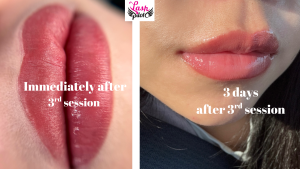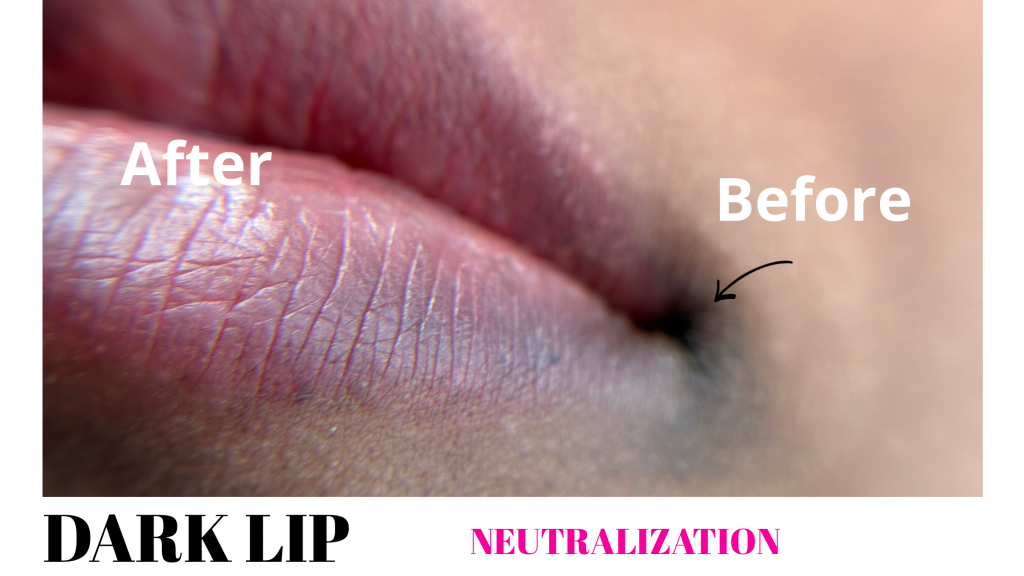
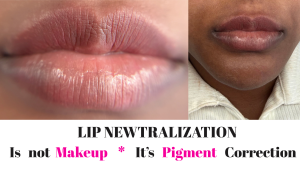
Lip Neutralization is not makeup. It is pigment correction.
At Lash Pilot Newport Beach, lip neutralization is performed as a melanin-balancing corrective procedure, not a cosmetic trend. This treatment is designed for clients with dark, two-tone, brown, purple, or gray lips who are not candidates for standard lip blush alone.
If lip blush adds color, lip neutralization corrects the canvas first.
What Is Lip Neutralization?
Lip neutralization is a controlled pigment correction process that uses color-theory-based corrective pigments (typically warm tones such as coral or orange) to counteract excess melanin and cool undertones in the lips.
Unlike lip blush, which assumes a pink or neutral base, lip neutralization:
- Corrects underlying darkness
- Addresses melanin dominance, not surface color
- Requires multiple sessions for safe, stable results
This procedure is most often required for:
- Dark upper lips
- Two-tone lips
- Smoker’s lips
- Genetic hyperpigmentation
- Post-inflammatory discoloration
The Science Behind Lip Neutralization
Why Are Some Lips Darker?
Dark lips are not caused by “bad circulation” or dryness alone. They are the result of:
- Eumelanin concentration in the vermillion border
- Higher melanin density in the upper lip
- Reduced vascular pink visibility
- Genetic and hormonal factors
Why Orange Pigment Is Used in Lip Neutralization
(And Why It Is Scientifically Correct — Not a Mistake)
Lip neutralization is often misunderstood because clients expect to see a “pretty pink” immediately. From a biological and optical standpoint, that expectation is incorrect — and unsafe.
Orange pigment is used because lip neutralization is not a color application. It is a melanin-correction process governed by skin physiology, pigment optics, and wound healing behavior.
1. The Skin Biology: Why Dark Lips Are Not “Surface Color”
Dark or two-tone lips are caused by melanin dominance, not pigment sitting on top of the skin.
Key factors:
- Lips contain melanocytes, especially concentrated in the upper lip
- Eumelanin (brown/black pigment) absorbs light
- This suppresses visible vascular pink tones
- Thicker epithelial turnover in darker lips prolongs pigment processing
👉 This means pink pigment alone cannot overpower melanin — it will heal gray, purple, or muted.
What Does “Eumelanin Absorbs Light” Mean?
Eumelanin is the natural brown or black color in our skin and lips.
When lips have a lot of eumelanin:
- The darker color soaks up light, like a dark shirt in the sun
- Less light reflects back
👉 Because light is absorbed, the lips look darker.
Simple example:
A black shirt absorbs sunlight and looks darker than a white shirt — same idea with lips.
What Does “This Suppresses Visible Vascular Pink Tones” Mean?
Under everyone’s lips are tiny blood vessels that naturally give lips a pink color.
But when there’s a lot of dark pigment:
- The brown color covers up the pink
- The pink is still there — you just can’t see it
👉 It’s like putting a brown curtain over a pink wall. The pink didn’t disappear — it’s just hidden.
What Does “Thicker Epithelial Turnover Prolongs Pigment Processing” Mean?
This one sounds big, but it’s simple.
- Epithelial turnover = how fast your skin replaces itself
- Darker lips often have thicker skin layers
- Thicker skin takes longer to heal and adjust
👉 That means pigment:
- Takes longer to settle
- Needs more time (and sometimes more sessions) to look even
Easy example:
Painting over a thick wall takes longer than painting over thin paper.
2. Color Theory Meets Skin Optics (Why Orange Is Required)
On the color wheel:
- Orange neutralizes blue-gray
- Orange counteracts brown undertones
- Pink alone sits adjacent to brown — it does not cancel it
In skin:
- Brown melanin + pink pigment = muddy or purple healing
- Brown melanin + orange corrective pigment = optical neutralization
This is not cosmetic color mixing — this is optical correction within translucent tissue.
Orange does not “add color.”
Orange subtracts unwanted undertone.
3. Pigment Chemistry: Yellow-Orange Vs Bright Orange
Not all orange pigments are the same.
Yellow-Orange Correctors
Used when:
- Lips have mild brown undertones
- Fitzpatrick III–IV
- Warm or neutral vascular base
Function:
- Soft melanin lift
- Faster healing transition
- Lower rebound risk
Bright Orange / Coral Correctors
Used when:
- Lips are deep brown, purple, or gray
- Fitzpatrick IV–VI
- Strong melanin dominance
- Smoker’s lips or genetic hyperpigmentation
Function:
- Strong melanin opposition
- Requires multiple sessions
- Looks intense initially (this is normal)
⚠️ Using pink instead of orange in these cases leads to ashen or violet healing.
4. Needle Science: Why Depth Matters More Than Color
Lip neutralization success depends heavily on needle selection and implantation depth.
Correct Depth
- Upper papillary dermis
- Shallow enough to avoid scarring
- Deep enough to prevent rapid exfoliation
What Happens If You Go Too Shallow
- Pigment exfoliates
- Orange disappears too fast
- Melanin reappears → dark rebound
What Happens If You Go Too Deep
- Pigment traps under melanin
- Healing turns gray or bruised
- Higher risk of long-term discoloration
This is why neutralization must be layered over sessions, not forced in one pass.
5. Why Orange Looks Bright Immediately (Inflammation Physics)
Freshly treated lips appear brighter because:
- Inflammation increases blood flow
- Vasodilation amplifies warmth
- Edema stretches tissue → color appears stronger
- Pigment has not yet been processed by macrophages
This is not the final color.
What Does “Vasodilation Amplifies Warmth” Mean?
Vasodilation simply means your blood vessels open wider.
When you get lip neutralization:
- Your body thinks, “I need to heal this area.”
- Blood vessels open up to bring in oxygen and nutrients.
- More blood = more heat + more redness.
👉 That extra blood makes the lips look warmer, redder, or brighter than they will later.
Think of it like this:
When you rub your hands together, they turn red and feel warm — not because they changed color forever, but because more blood rushed in.
What Does “Edema Stretches Tissue → Color Appears Stronger” Mean?
Edema is just a fancy word for swelling.
After a lip procedure:
- The lips swell slightly
- The skin stretches tight, like a balloon
- When skin stretches, color looks bolder and brighter
👉 This makes pigment look stronger than it really is.
Easy example:
When you stretch a colored rubber band, the color looks brighter.
When it relaxes, the color looks softer.
Same thing with lips.
What Are Macrophages?
Macrophages are your body’s clean-up crew.
They:
- Travel through your skin
- “Eat” extra pigment particles
- Decide how much color stays and how much fades
After lip neutralization:
- Macrophages slowly remove excess pigment
- This is why color softens over time
- This is normal and healthy healing
In summary, right after lip neutralization:
- More blood = warmer color
- Swelling = brighter appearance
- No clean-up yet = pigment looks intense
As healing happens:
- Blood flow calms down
- Swelling goes away
- Macrophages clean up extra pigment
👉 That’s why lips always look brighter at first and then soften into their true color.
Pigment Chemistry In Lip Neutralization: Why Use Yellow-Orange Or Bright Orange Correctors?
In lip neutralization, the term “orange” does not describe a single pigment but rather a range of corrective tones designed to interact differently with melanin-dominant tissue. Selecting the appropriate shade of orange is one of the most critical decisions in the correction process because it determines how effectively unwanted brown, purple, or gray undertones are neutralized during healing. The choice is guided by the depth of pigmentation, the client’s Fitzpatrick skin type, and how much natural vascular warmth is still visible in the lips.
Yellow-orange correctors are typically chosen when the lips exhibit mild to moderate brown undertones but still retain a warm or neutral base. In these cases, the lips often belong to Fitzpatrick skin types III to IV, where melanin is present but not overwhelmingly dominant. A yellow-orange pigment works by gently lifting the brown undertone without overpowering the tissue. Because the melanin load is lighter, this type of corrector integrates more smoothly into the skin, allowing the lips to transition through healing more efficiently. The color shift tends to appear softer, and the risk of rebound darkening is lower because the skin is not overstimulated by aggressive correction. The goal in these cases is refinement and balance rather than dramatic opposition.
Bright orange or coral correctors are reserved for lips with significantly deeper pigmentation, including dark brown, purple, or gray tones where melanin strongly suppresses visible pink. These cases are more commonly seen in Fitzpatrick skin types IV to VI, as well as in individuals with smoker’s lips or genetically driven hyperpigmentation. When melanin concentration is high, subtle correctors are insufficient. A brighter orange pigment is necessary to create a strong optical counterbalance to cool and dark undertones. Immediately after treatment, this pigment often appears intense due to swelling and increased blood flow, but this appearance is temporary and expected. Because the skin requires time to process and stabilize such correction, multiple sessions are necessary to achieve even, natural-looking results without triggering pigment rebound or tissue stress.
Attempting to use pink pigment in melanin-dominant lips bypasses the corrective step entirely. Pink does not neutralize brown or blue-gray undertones; instead, it mixes with them during healing. This interaction often results in lips that heal ashen, violet, or dull rather than brighter or more even. Effective lip neutralization depends on respecting pigment chemistry and skin biology rather than aesthetic preference. When the correct shade of orange is chosen for the level of pigmentation present, the correction process becomes predictable, controlled, and long-lasting.
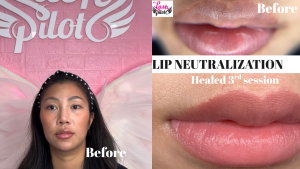
Why Lip Neutralization Cannot Be Completed In A Single Session
Lip neutralization cannot be safely or predictably completed in one session because the process involves correcting melanin-dominant tissue, not simply adding color. Melanocytes, the cells responsible for producing melanin, are highly responsive to trauma. When too much pigment is implanted at once or when the skin is overstimulated in an attempt to force immediate visual change, these cells can react defensively by increasing melanin production during healing. This response often results in post-inflammatory hyperpigmentation, where the lips appear darker, patchy, or uneven weeks after the procedure rather than lighter or more balanced.
Aggressive correction in a single session also disrupts the natural healing rhythm of the lips. Lip tissue is thin, vascular, and elastic, meaning it swells easily and processes pigment gradually. When saturation is excessive, pigment distribution becomes inconsistent as the skin heals, leading to uneven color retention and unpredictable fading. In many cases, the initial brightness seen immediately after treatment gives way to color regression as the skin sheds excess pigment and melanin reasserts itself. This cycle can leave clients feeling as though the procedure “didn’t work,” when the true issue was that the skin was pushed beyond what it could safely accommodate.
Advanced lip neutralization follows a fundamentally different philosophy. Instead of forcing results, correction is performed using conservative saturation and carefully controlled trauma, allowing the skin to respond without triggering a defensive melanin surge. Pigment is layered gradually over multiple sessions, giving the tissue time to stabilize, regenerate, and reveal how it will truly heal before additional correction is introduced. This pacing respects the biological behavior of melanin and allows each session to build upon the last with greater precision.
Multiple sessions are not a sign of difficulty or failure; they are a sign of expertise and restraint. By allowing the lips to heal fully between treatments, the artist can evaluate pigment response, adjust corrective tone, and ensure long-term stability. This method produces results that are more even, more natural, and significantly less prone to rebound darkening. In lip neutralization, patience is not a delay—it is the foundation of successful correction.
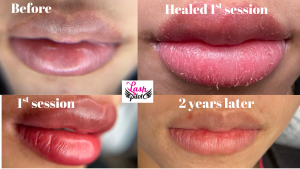
Orange pigment in lip neutralization is not a cosmetic choice — it is a corrective necessity dictated by melanin biology, optical color theory, and controlled dermal implantation. When properly selected and implanted, orange does not remain visible; it neutralizes unwanted undertones and allows natural pink to emerge through healing.
Lip Neutralization vs Lip Blush vs Lip Filler (Decision Matrix)
| Feature | Lip Neutralization | Lip Blush | Lip Filler |
|---|---|---|---|
| Primary purpose | Correct dark undertones | Enhance natural lip color | Add volume |
| Changes lip size | ❌ No | ❌ No | ✅ Yes |
| Uses corrective pigments | ✅ Yes | ❌ No | ❌ No |
| Suitable for dark lips | ✅ Yes | ⚠️ Limited | ❌ No |
| Sessions required | 2–4 | 1–2 | Ongoing |
| Healing complexity | Higher | Moderate | Low |
Is Lip Neutralization Safe?
Yes — when performed by an advanced corrective artist trained in:
- Pigment chemistry
- Fitzpatrick skin typing
- Depth control
- Melanin response patterns
⚠️ The biggest risk is over-correction in one session, which can trigger:
- Post-inflammatory hyperpigmentation
- Patchy healing
- Color rebound
At Lash Pilot Newport Beach, correction is intentionally staged to protect long-term results.
How Long Does Lip Neutralization Last?
- Results typically last 2–4 years
- Longevity depends on:
- Skin type
- Sun exposure
- Smoking
- Lip care habits
- Annual color refresh may be recommended
Lip neutralization is semi-permanent, not permanent.
Healing Timeline (What Clients Need to Know)
First 7–10 Days
- Swelling
- Bright or warm appearance
- Peeling phase
2–6 Weeks
- Color softens
- Melanin settles
- True undertone emerges
8–12 Weeks
- Ready for next correction session if needed
Healing is a biological process — not an instant reveal.
Who Is a Good Candidate for Lip Neutralization?
Ideal Candidates
- Two-tone lips
- Dark upper lip
- Brown or purple undertones
- Smoker’s lips
- Clients dissatisfied with lip blush results elsewhere
May Not Be Ideal Without Medical Clearance
- Active cold sores
- Accutane use (within 6 months)
- Severe anemia
- Autoimmune flare-ups
- Unrealistic expectations (“nude pink in one session”)
Disadvantages & Limitations
Lip neutralization:
- Requires patience
- Takes multiple sessions
- Looks intense during early healing
- Is more expensive than lip blush
These are not flaws — they are the reality of corrective work done safely.
Aftercare: What to Avoid (And Why)
Avoid:
- Heat & steam → causes vasodilation
- Tooth paste spills on lips while brushing teeth
- Spicy food → increases inflammation
- Kissing (7–10 days) → friction & bacteria
- Sun exposure → melanin activation
Proper aftercare protects pigment stability and prevents rebound darkening.
Pricing: Lip Neutralization in Newport Beach
At Lash Pilot Newport Beach:
- New Lip Neutralization: $450–$799
- 30–60 Day Touch-Up: $259
- 1-Year Touch-Up: $379
- After 1 Year Touch-Up: $399
Pricing reflects:
- Corrective expertise
- Advanced pigment sets
- Multi-session planning
- Extended healing observation
Is Lip Neutralization Worth It?
If you:
✔ Have dark or uneven lips
✔ Want natural pink balance
✔ Are tired of lipstick correction
✔ Want long-term confidence
Then yes — lip neutralization is worth it.
How Lip Neutralization Can Fail — And Why Results Depend On The Artist, Not The Ink
Lip neutralization does not fail because the technique itself is flawed. It fails when the biological behavior of skin is misunderstood or ignored. Unlike lip blush, which enhances an already neutral base, lip neutralization works against existing melanin dominance. Because of this, mistakes may not be obvious on the day of treatment. They often appear weeks later during the healing phase, when pigment interacts with melanin, blood flow, and tissue regeneration. This delayed reaction is why many clients believe neutralization “went wrong,” when in reality the issue was an improper approach from the beginning.
One of the most common reasons lip neutralization fails is treating dark lips as if they are simply a darker version of pink lips. In melanin-rich lips, particularly the upper lip, brown pigment sits within the tissue and absorbs light. When soft pink or nude pigments are placed over this melanin without proper correction, the color does not brighten. Instead, it heals muted, gray, or purple. This outcome often disappoints clients because the problem does not show immediately; it becomes apparent only after swelling subsides and the true healed tone emerges.
Another frequent cause of poor results is overcorrection in an attempt to achieve fast visual change. When too much pigment is implanted in a single session, or when overly bright corrective shades are used aggressively, the skin responds defensively. Melanin-producing cells can become stimulated by excessive trauma, leading to rebound darkening during healing. This reaction is often misinterpreted as pigment rejection, when it is actually the skin protecting itself. Safe neutralization requires restraint and an understanding that correction must be layered gradually.
Needle depth is another critical factor that determines success or failure. Lip tissue is thin, elastic, and highly vascular, which means there is very little margin for error. When pigment is placed too shallow, it sheds during exfoliation and the original darkness returns. When pigment is implanted too deeply, it sits beneath melanin-rich tissue and heals looking gray, bruised, or uneven. Because this mistake is invisible to the client, it often goes unnoticed until healing is complete, making correction more difficult later.
Lip neutralization can also go wrong when corrective pigments are chosen without considering undertone and melanin intensity. Not all orange pigments function the same way. Some lips require a softer yellow-orange to gently lift brown undertones, while others need a stronger coral-orange to counter deeper, cooler pigmentation. Using an incorrect shade does not neutralize darkness; it creates imbalance. Successful correction depends on selecting pigments that interact correctly with the client’s unique skin chemistry.
Many complications arise simply because clients are not educated about the healing process. Immediately after treatment, swelling stretches the lips and increased blood flow makes pigment appear warmer and brighter than it truly is. Without proper explanation, clients may panic during this phase and seek unnecessary adjustments that disrupt healing. When expectations are not managed, even a technically sound procedure can feel like a failure to the client.
Why Lip Neutralization Is Different At Lash Pilot Newport Beach
At Lash Pilot Newport Beach, lip neutralization is approached as a biological correction process rather than a cosmetic service. Every treatment plan is designed around how melanin behaves in the skin, how pigment settles over time, and how the lips heal as living tissue. The goal is not instant visual satisfaction but long-term balance and stability.
Rather than applying pressure to force immediate results, Lash Pilot uses precision and restraint. Pigment is layered conservatively, trauma is minimized, and progress is evaluated session by session. If the lips are not ready for further correction, the process pauses. This respect for skin physiology is what protects clients from rebound darkening and uneven healing.
Pigment selection at Lash Pilot is never generic. Corrective shades are chosen based on the depth of pigmentation, temperature of undertones, light reflection, and the client’s known healing patterns. Orange pigments are used with intention, not assumption, and only when correction is biologically necessary.
Education is considered part of the service. Clients are fully informed about why orange appears during correction, how swelling affects color perception, and why healing takes time. This transparency eliminates fear and builds trust. There are no surprises, only informed progression toward balanced results.
Newport Beach clients choose Lash Pilot because they value natural outcomes, honest timelines, and expertise rooted in skin health rather than trends. Lip neutralization here is not about looking “done.” It is about restoring harmony between pigment, tissue, and natural lip tone.
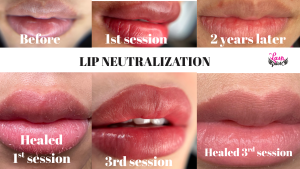
The Bottom Line
Lip neutralization does not go wrong because it is risky. It goes wrong when it is rushed, oversimplified, or treated like a decorative procedure instead of a corrective one. When skin biology leads the process, the results speak for themselves.
Myths vs Reality
Myth: Orange lips mean it failed
Reality: Orange is the corrective phase
Myth: One session is enough
Reality: Safe correction is layered
Myth: Lip blush works on everyone
Reality: Dark lips need neutralization first
⭐⭐⭐⭐⭐ Review #1
I almost talked myself out of lip neutralization because of things I saw online. When I came to Lash Pilot, they didn’t sugarcoat anything — they explained why orange pigment is normal, how swelling affects color, and why patience matters. That honesty made me feel so much better. Healing went exactly how they described and my lips look softer and more even every week. I really appreciated how educated and calm the whole experience felt.
⭐⭐⭐⭐⭐ Review #2
I’ve been insecure about my dark upper lip for years and assumed fillers or lipstick were my only options. Lash Pilot explained lip neutralization in a way that actually made sense. It wasn’t instant, but the results are beautiful and natural. My lips finally look balanced. You can tell they care more about long-term results than quick fixes.
Why Choose Lash Pilot Newport Beach?
- Health-first philosophy
- Advanced corrective training
- Thousands of healed cases
- Conservative, skin-respectful approach
- Trusted by Newport Beach professionals
📅 Book a Consultation
📞 714-260-3910
📍 2711 East Coast Hwy #12, Corona del Mar, CA 92625